Staff Shortage in Medical Practices: How AI Solves the Reception Problem
Key Takeaways
Medical practices across America face a staffing crisis: 70% struggle to fill front desk positions (MGMA), and 78% of medical staff report burnout (AMA). Personal contact between practice and patient is irreplaceable. An AI phone assistant like Vokaro only steps in when no one can answer, catches missed calls, and books appointments. At $129/month, it pays for itself after just a few booked appointments.
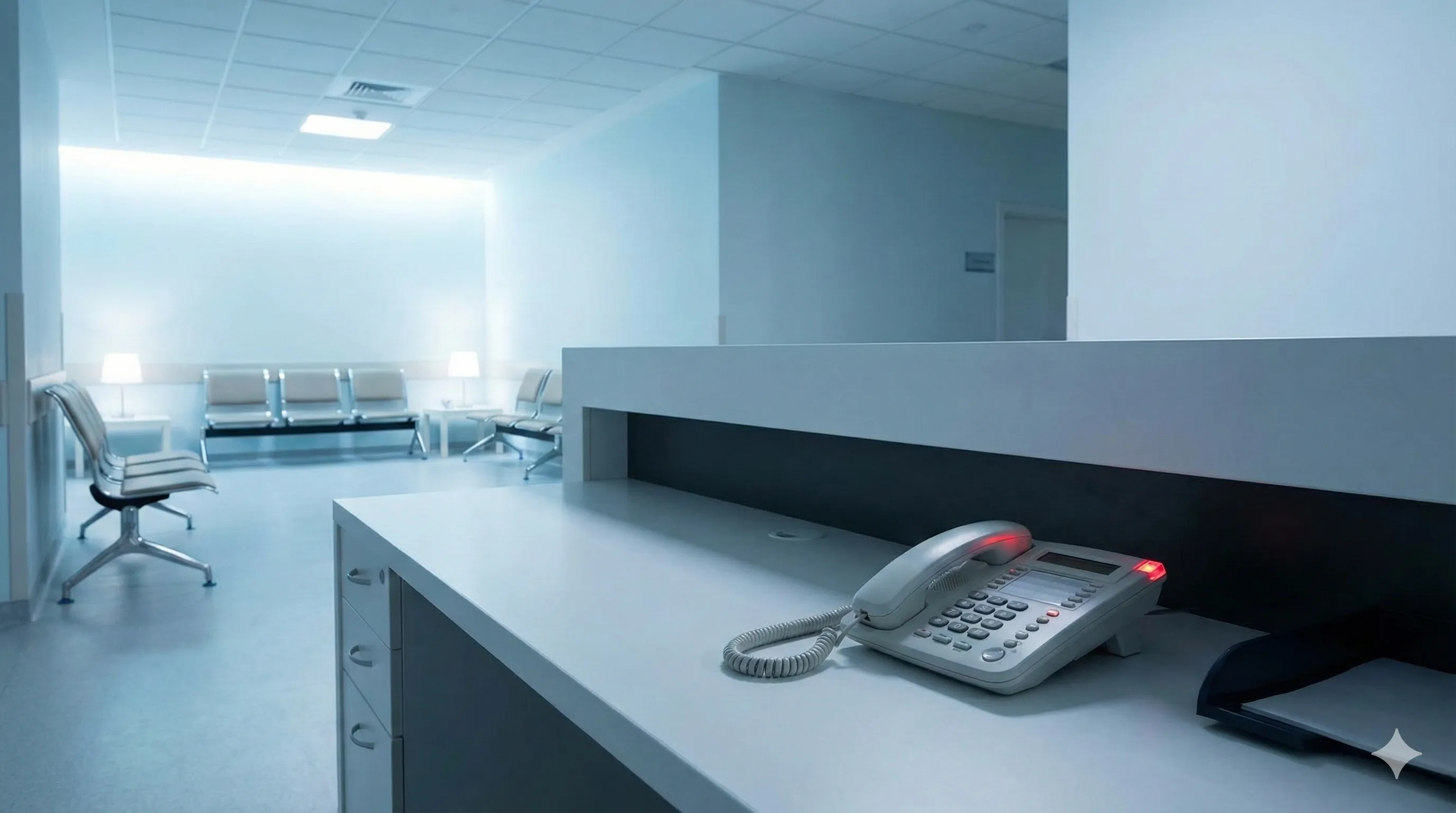
The Scale of the Crisis: Staff Shortage in US Medical Practices
The healthcare staffing shortage has reached critical levels. According to the Medical Group Management Association (MGMA), 70% of medical practices report difficulty filling administrative positions. The American Medical Association found that 78% of physicians and staff experienced burnout symptoms. The Bureau of Labor Statistics projects healthcare support occupations will grow 16% through 2032, but training programs can't keep pace with demand.
- 70% of practices struggle to fill front desk positions (MGMA)
- 78% of medical staff report burnout symptoms (AMA)
- Healthcare support jobs projected to grow 16% through 2032
- Average turnover rate for medical receptionists: 30-40% annually
70%
MGMA - Practices struggling with administrative staffing
Why Front Desk Staff Leave: The Top 5 Reasons
A study by the Healthcare Financial Management Association reveals that workload imbalance is the primary driver of turnover. Three out of four front desk employees report that job demands exceed compensation. The reasons for high turnover are consistent across practices.
- Low wages: Average $16-18/hour – retail and other sectors now pay more
- Chronic overwork: 78% of staff under high stress
- Constant interruptions from phone calls and walk-ins
- Lack of career advancement opportunities
- Poaching by hospitals and urgent care with better benefits
78%
American Medical Association - Staff burnout rate(Source)
The Hidden Burden: The Practice Phone
The phone is one of the biggest stress factors in medical practices. An average practice receives 50+ calls daily. At an average call duration of 3-4 minutes, that adds up to 3+ hours daily – in group practices, that's nearly a full-time position. The problem: constant interruptions not only burden staff but lead to errors and reduced patient care quality.
- 2-4 hours daily spent on phone calls
- 50+ calls per day on average
- 3-4 minutes average call duration
- In group practices: equivalent to almost one FTE
50+ calls/day
Average US medical practice
The Consequences: What Happens When the Front Desk is Understaffed?
An understaffed front desk has far-reaching consequences for practice and patients. Every missed call is a potentially lost patient. Every minute on hold increases frustration. And every additional burden on remaining staff increases sick days and turnover risk – a vicious cycle.
- Long phone wait times → patients switch practices
- Missed calls → lost patients and revenue
- Overworked staff → more sick days and resignations
- Less time for in-person patients → declining care quality
- Burnout risk for remaining personnel
Why Traditional Solutions Don't Work
The obvious solutions fail due to the staffing shortage reality or are economically unfeasible for many practices.
| Solution | Problem |
|---|---|
| Hire more staff | No qualified applicants available, high salary demands |
| Part-time help | High turnover, unreliable, long training time |
| Voicemail | 80% of callers don't leave a message (Ruby study) |
| External call center | No medical knowledge, expensive ($400-800/month) |
80%
Ruby Receptionist - Callers don't leave voicemail(Source)
The AI Solution: What a Phone Assistant Does
Important: A good AI phone assistant doesn't replace personal contact between practice and patient. It enables it. By catching routine inquiries when no one can answer, your team has more time for in-person patients. Unlike classic IVR systems ('Press 1 for...'), AI conducts real conversations in natural language. Studies show practices save up to 10 hours per week.
- 24/7 availability – evenings and weekends too
- No hold queues: unlimited parallel calls possible
- Automatic appointment booking directly to practice calendar
- Prescription refill and referral requests intake
- FAQ answering (hours, directions, services)
- Emergency detection with immediate routing to on-call
10+ hours/week
Time savings through AI phone assistants
Real Example: Time Savings Calculated
A group practice with four providers implemented an AI phone assistant. The result: A callback prepared by the AI takes only 4 minutes instead of 10 minutes. That's 6 minutes saved per call. At 50 calls daily, that equals 25 hours per month – time staff now use for in-person patient care.
- Prepared callback: 4 min instead of 10 min (6 min savings)
- At 50 calls/day: ~25 hours/month saved
- Staff can focus on patients in the office
- Less stress from fewer phone interruptions
25 hours/month
Group practice with 4 providers
Patient Data and Privacy: What You Need to Know
When processing patient data, strict privacy requirements apply. An AI phone assistant for medical practices must handle health data with care. Key requirements include EU-based servers, encrypted data transmission, data processing agreements with service providers, and no permanent storage of health information. Vokaro runs on German servers (Hetzner, Nuremberg) and processes all data in the EU in line with GDPR.
- EU-based servers for all processing
- Data processing agreements with service providers
- Encrypted transmission of all conversations
- No permanent storage of health information
- GDPR compliance as the standard for health data
Cost-Benefit Analysis: Is It Worth the Investment?
Note: Vokaro is a safety net for missed calls – it complements your existing team. The economics show: An AI phone assistant pays for itself after just a few booked appointments.
| Solution | Cost/Month | Availability | Onboarding |
|---|---|---|---|
| Full-time receptionist (new hire) | $3,500-4,500 | Hard to find | 3-6 months |
| Part-time receptionist | $1,800-2,500 | Hard to find | 2-4 months |
| External call center | $400-800 | Immediate | No medical knowledge |
| AI phone assistant (backup) | $129 | Immediate (setup typically within a week) | Ready quickly |
from $129/month
AI phone assistant as complement to existing front desk
Conclusion: The Future of Practice Reception
The staffing shortage will worsen in coming years – all demographic projections confirm this. Practices that act now gain a competitive advantage. An AI phone assistant doesn't replace staff, it complements the team: it handles time-consuming routine phone tasks so staff can focus on what really matters – in-person patient care. At $129/month and time savings of up to 10 hours per week, the investment pays off within a few weeks for most practices.
- Staff shortage will worsen (demographic shift)
- AI as complement, not replacement for staff
- Relief enables better patient care
- Competitive advantage for early adopters
- ROI typically achieved in 1-2 weeks
Frequently Asked Questions
How severe is the medical practice staffing shortage?
According to MGMA, 70% of practices struggle to fill administrative positions. The AMA reports 78% of medical staff experience burnout. By 2032, healthcare support occupations are projected to grow 16%, but training programs can't keep pace.
Why do so many front desk staff quit?
78% of medical staff report burnout (AMA). Main reasons: low pay (average $16-18/hour), frequent overtime, lack of appreciation, and constant phone interruptions. Many are recruited by hospitals offering better benefits.
How much time does the front desk spend on phones?
An average medical practice receives about 50+ calls per day. At 3-4 minutes per call, that adds up to 2-4 hours daily. In group practices, that's nearly equivalent to a full-time position.
Does an AI phone assistant answer immediately or do I have time to pick up myself?
Quality AI phone assistants like Vokaro wait. Only after 10-15 seconds of ringing or outside your office hours does the assistant step in. Personal contact always takes priority.
How does an AI phone assistant work with my staff?
The AI assistant catches missed calls and handles routine tasks like appointment booking, prescription refill requests, and FAQ answering. This lets your staff focus on in-person patient care, where human empathy is irreplaceable. Complex cases are immediately transferred to your team.
Is an AI phone assistant privacy-compliant for medical practices?
Yes, when it is built for GDPR compliance with EU-based servers and careful data handling. Vokaro runs on German servers (Hetzner, Nuremberg), processes data in the EU, and is designed for the special requirements of health data. The exact configuration for your practice is clarified together during onboarding.
What does an AI phone assistant for medical practices cost?
Costs start at $129/month. Compare that to a full-time receptionist at $3,500-4,500/month. With time savings of 10+ hours per week and avoided missed patient calls, the investment typically pays off in 1-2 weeks.
Do patients realize they're speaking with AI?
Modern AI phone assistants use natural speech synthesis and respond in real-time. Studies show only 15-20% of callers recognize the AI. Patient satisfaction remains high because concerns are addressed immediately – no hold time.
What tasks can an AI phone assistant handle?
Typical tasks include: appointment scheduling with direct calendar booking, prescription refill requests, referral request intake, FAQ answering (hours, directions, services), emergency detection with routing, and 24/7 availability outside office hours.
AI Phone Assistant for Your Business
Never miss a call again. Vokaro answers your calls 24/7, books appointments, and detects emergencies.